
January 2, 2014

Angstrom-Advanced

Image
   Angstrom Advanced Inc., designs, manufactures and supplies scientific instruments and Hydrogen & Nitrogen plants for academic and industrial use. Angstrom Advanced instruments and plants have been delivered to many renowned organizations. Angstrom Advanced goal is to provide their customers with the best products with highest standard of service at cost efficient pricing. Angstrom Advanced now provides several product lines including Spectrophotometer, X-ray Diffractometer, Gas Generator, Atomic Force Microscope/Scanning Probe Microscope, Hydrogen Generating Plant and Nitrogen Generating Plant. Angstrom Advanced corporate headquarters are located  in Massachusetts, USA. Angstrom Advanced have numerous partnerships, representatives in countries around the world.

  Angstrom Advanced delivers a reputable and highly efficient world accepted Hydrogen and Nitrogen Generating Plants for refinery, petrochemical and other industrial applications. Angstrom Advanced services for Hydrogen Plant projects typically include conceptual design, detailed engineering, procurement, fabrication, construction, start-up and operational training. The production line of Gas Generators includes Hydrogen Plant, Nitrogen Plant and Air Plant. The combination Plants for both Hydrogen and Nitrogen, and Air and Hydrogen are available. These generators have state of the art technology, stability and functionality for scientific instruments, industry and solar and wind energy. Angstrom Advanced provide a lump-sum, turnkey solution, handling everything from concept to start-up with our own resources whenever possible.
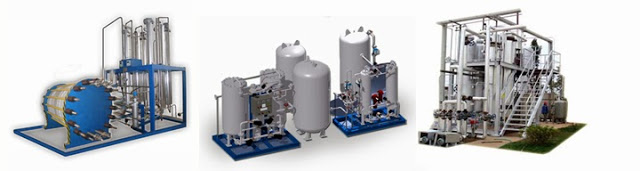
image
Angstrom Advanced Hydrogen Generating Plant product line include technologies such as:
  • Angstrom Advanced Hydrogen Plant by Water Electrolysis
  • Angstrom Advanced Hydrogen plant by Natural Gas Steam Reforming
  • Angstrom Advanced Hydrogen Plant by Pressure Swing Adsorption with Purifying System
  • Angstrom Advanced Hydrogen Plant by Ammonia Decomposition with Purifying System
  • Angstrom Advanced Hydrogen Plant by Methanol Decomposition
  Angstrom Advanced offers gas and liquid Nitrogen Generating Plants from 0.5 m3/hr to 10000 m3/hr. Angstrom Advanced is on the forefront of technologies for Pressure Swing Adsorption (PSA) and Membrane Separation and providing turn-key nitrogen generation projects to meet different industrial applications. We also offer Nitrogen Purifying System to purify the nitrogen up to 99.9995%. Nitrogen/Oxygen Plant by Pressure Swing Adsorption (PSA).
Angstrom Advanced Nitrogen Generating Plant product line include technologies such as:
  • Angstrom Advanced Nitrogen Plant by Membrane Separation
  • Angstrom Advanced Nitrogen Purifying System
  • Angstrom Advanced Liquid Nitrogen, Oxygen, Argon Plant by Cryogenic Technology

  Angstrom Advanced Atomic Force Microscope / Scanning Probe Microscope include AFM, SPM, STM, LFM, EFM. All of Angstrom Advanced microscope line-up bring state the art technology to meet the most advanced applications and are designed to provide images of atomic scale up to 100 micrometer. With a Digital Signal Processor inside the system, Angstrom Advanced systems can handle complicated multi-functional tasks efficiently. Angstrom Advanced Atomic Force Microscopes (AFM) which has full coverage of Contacting Mode, Tapping Mode, Phase Imaging and Lifting Mode, Lateral Force Microscope (LFM), Scanning Tunneling Microscope (STM), Conductive AFM, SPM in liquid, Environmental Control SPM, Nano-Processing System including Lithography Mode and Vector Scan Mode.
  Angstrom Advanced has been bringing forth the latest advancements in all fields of technology and was founded by a group of engineers that realized the importance to research and development for the better of mankind. Angstrom Advanced location in the heart of high technology schools and Institutes made us a leading developer and manufacturer of Scientific instrument s. Angstrom Advanced instruments have been delivered to many renowned universities, research institutes and companies worldwide. Angstrom Advanced goal is to supply the most accurate and sustainable scientific instrument with the highest standard of customer satisfaction.
Learn more about Angstrom Advanced by going to: www.angstrom-advanced.com

Angstrom Advanced AA2000 Atomic Force Microscope
Our goal is to provide our customers with the best products with highest standard of service at cost efficient pricing.

Angstrom Advanced AA5000 Multi-function SPM Systems
Introductions
Angstrom Advanced AA5000 Scanning Probe Microscope is Angstrom most innovated model. Angstrom Advanced AA5000 features a full coverage of SPM techniques-STM, AFM, LFM Conductive AFM, MFM, EFM, Environmental Control SPM and Nano-Processing... AA5000 is designed to provide images of atomic scale up to 100 micrometer. With a Digital Signal Processor (DSP) TMS320C642 inside the system, AA5000 can handle complicated multi-functional tasks efficiently. A real-time operating system of SPM/DNA is embedded in AA5000 SPM system.
Features

  • Multi-function: AFM, LFM, STM, Conductive AFM, MFM and EFM;
  • Multi-Mode: Contacting Mode, Tapping Mode, Phase Imaging and Lifting Mode;
  • SPM can be in liquid;
  • Real-time temperature and humidity detecting;
  • Force Analysis: I-V Curve, I-Z Curve, Force Curve and Amplitude Curve;
  • Nano-Processing and manipulating: Lithography Mode and Vector Scan Mode;
  • Fast automatically tip-engaging
  • Simply change of the tip holder to switch between STM and AFM;
  • Full digital control, auto system status recognition;
  • Adjustable lightening inside
  • With a 32-bit Digital Signal Processor (DSP) from Texas Instruments, 4.8 billion times of calculation per second can be achieved;
  • Controller and Computer connected through a 10M/100M Fast Ethernet;
  • Large sample size: up to diameter 45mm, 30mm thick;
  • Online Control Software and offline Image Processing Software for Windows;
  • Trace-Retrace scan, Back-Forward scan;
  • Online real-time 3D image;
  • Automatically Brightness and Contrast refresh;
  • Data can be loaded out for further analysis;
  • Nano-Movie function: Continuous data collection, storage and replay;
  • Multi-Analysis: Granularity and Roughness;
  • Tip Estimation and Image Re-construction;
  • Modularized design for convenience of maintenance and future upgrade;
  • Second display monitor and optical microscope system attachable;
Specifications
FunctionsAtomic Force Microscope (AFM) which has full coverage of Contacting Mode,
Tapping Mode, Phase Imaging and Lifting Mode;
Lateral Force Microscope (LFM);
Scanning Tunneling Microscope (STM);
Conductive AFM, SPM in liquid, Environmental Control SPM;
Nano-Processing System including Lithography Mode and Vector Scan Mode;
ResolutionAFM: 0.26nm lateral, 0.1nm vertical;
STM: 0.13nm lateral, 0.01nm vertical;
Technical
Parameters
Current Sensitivity: less than or equal to 10pA;
Force Sensitivity:less than or equal to 5pN;
Image Pixels: 128X128, 256X256, 512X512, 1024X1024, 2048X2048;
Scan Angle: 0-360 degree adjustable;
Scan Rate: 0.1-100Hz adjustable;
Pre-setting Tunneling Current: 0.001-10nA Bias: -10-+10V;
Temperature Sensitivity: 0.1Celsius, Humidity Sensitivity: 0.5%RH;
Sample Size: Up to 50mmx50mm, 30mm thick;
Engagement: Auto engagement with travel distance of 30mm and precision of 50nm;
Online Control Software and offline Image Processing Software for Windows
Vista/XP/2000/9x;
ElectronicsCPU: 32-bit Digital Signal Processor (DSP) at 600MHz from Texas Instruments;
DAC: 20 channels of 16-bit DAC;
ADC: 20 channels of 16-bit ADC;
Communication Interface: 10M/100M Fast Ethernet;


Angstrom Advanced OS-AA Opening Multifunction Scanning Probe Microscope
Introductions
Angstrom Advanced OS-AA SPM system is known for its multi-functionality and full openness. OS-AA system is not just a platform for unconventional experiments but also for further developments.
Features

  • Multi-function: STM, AFM, LFM, MFM, EFM, Contacting Mode, Tapping, Phase
  • Imaging with Full digital control 16bit ADC/DAC
  • High speed communication based on TCP/IP protocol for double-CPU-double-OS and
  • large data-exchange
  • Input/output signal channel preserved for further system extension
  • Standard external open interface for second developments
  • I-V Curve and Force-Curve
  • Nano-Processing
  • Nano-manipulating with Super-Multimedia technology
  • Designed for Windows Vista/XP/NT/2000/9X
  • Hardcode and Dynamic Code both applied to offline software
  • Brightness and contrast auto refreshed Multi-Analysis: Granularity and Roughness
Specifications
Resolution: AFM: 0.26nm lateral, 0.1nm vertical;STM: 0.13nm lateral, 0.01nm vertical
Current Sensitivity: ≤10pA
Force Sensitivity: ≤ 1nN
Positioning Accuracy: ≤ 0.5nm
Output channels preserved: 6ch (1ch ± 10V, 16-bit DAC)
Input channels preserved: 16ch (100k/16-bit ADC with Low-pass filter and amplifier)
DI/DO channels preserved: 8ch DI, 8ch DO


Angstrom Advanced AA8000 Multi-function SEM System
Introductions
Angstrom Advanced AA8000 SEM is a true multi-purpose, multi-user instrument. It excels in versatility and flexibility by combining high performance in all SEM modes & Particle counter with ease of operation in a multi-user material research environment. This instrument features a perfect balance between stable configuration and an excellent resolution. Angstrom Advanced SEM clearly shows Angstrom’s state-of-art technology. Its rock-solid reliability and fully automated control functions provide customer with the maximum analytical capability. Angstrom Advanced SEM pursues compact SEM design which is great for office environment. Angstrom Advanced SEM provides high scan speed and pixel resolution and high performance control driver with new PCI board. A full set of automated image adjustment functions make it easy for new users to quickly acquire crisp, noise-free images. Even experienced users will benefit from the automated contrast, brightness and focus.
Features
High Performance
  • Field proven image quality
  • Upgraded scan speed and pixel resolution.
  • Wide variety of optional instrument
  • Resolution : 3.0 nm
  • Magnification : ~1,000,000X
  • Display : Photo 4096X 4096
  • Search : 640X480 30fps
  • Options : BSE / WDS / EDS / EBSD / Etc.
Gun Coumn
  • Gun design for stable current supply
  • Dual field objective lens for spherical
  • Aberration reduction
  • Movable aperture for beam centering
  • Upgraded design of magnetic lens (CL/OL)
Chamber & Stage
  • 5 axis eucentric stage
  • Option: Stage motorization
  • EDS,WDS,CCD, Manipulator etc
  • 50X60X57mm
Detector
  • ET-bar type SE detector
  • SE & BSE double image mode
  • Option: BSE detector
GUI
  • Window based GUI
  • PC controlled operation
  • Image thumbnail & storage
  • Parameter Display
Vacuum System
  • Automatic & Manual control
  • Automatic Safety System
  • R.P+D.P/ R.P+TMP
Image Analyzer
  • Data transfer to Excel
  • Particle counter for blob analysis
  • Multi-focusing & Tiling
  • 3D data view etc
Specifications
Z ELECTRON OPTIC SYSTEM
Resolution3.0 nm @30KeV SE/ 4.0nm @BSE
 Magnification10 ~ 1,000,000X
ImageColor Optical Microscope Image (Option)
Beam Scan ModeSearch, Inspection, Photo (3step)
Accelerating Voltage0.5kV~30kV
Electron Gun TypeTungsten Filament
Bias SystemLinked with Acc. Voltage plus continuous voltage control
Gun AlignmentPre-centered cartridge
Condenser LensElectromagnetic 2 stages
Objective LensElectromagnetic 1 stages
Stigmator8 Pole Electromagnetic Type
DetectorBar Type SE Detector (SE-BSE Conversion Mode Without BSE detector for Non-coating sample inspection)
Image Shift4 Pole Electromagnetic Type
Automation FunctionAuto-Focus, Auto-Stigmatism, Auto Contrast/Brightness, Emission Current etc.
DISPLAY
Frame Memory &ScanSearch (640X480) >30 frame/s
Inspection (1280X960)  30 frame/s
Photo(4096X4096)  2 frame/s
IMAGE ANALYZER
Image Analyzer Particle Counter
Multi-Focusing/ Image Tiling/ 3D-View/Enhancement/ Color Transformation/Filters/ Blob Analysis (Single/Multiple/Grouping), Histogram, Excel Data, Point Measurement
STAGE SYSTEM
Movement (X/Y/Z) mm
50/ 60/ 57mm
Tilt
-30~60° (Max 90 °)
Rotation
360°
Stage MotorizationX,Y,R (Standard) X,Y,Z,Tilt,Rotation (Option)

VACUUM SYSTEM
Vacuum Control Type
Full automation with safety system
Vacuum System
Rotary Pump + Diffusion Pump or Rotary Pump + Turbo Pump (Option)

CONTROL SYSTEM
Computer System
Intel Pentium 4(Dual Co-Processor)
Memory
≥ 256MB, Control Data Interface
Operation System
Image Acquisition

Angstrom Advanced ADX-2500 X-ray Diffraction Instrument
Introduction
Angstrom Advanced ADX-2500 X-ray Diffraction Instrument is designed for application in the microstructure measurement, testing and in-depth research investigations. With different accessories and the corresponding control and calculating software, Angstrom Advanced ADX-2500 is a diffraction system according to the practical requirements in many fields.
Angstrom Advanced ADX-2500 X-ray Diffraction Instrument provides the structure analysis of single crystal, polycrystalline and amorphous sample. Angstrom Advanced ADX-2500 is capable of the following: phase qualitative analysis and quantitative analysis (RIR, Internal standard calibration, External standard calibration, Additive criterion), pattern indexing, unit cell determination and refinement, crystallite size and strain determination, profile fitting and structure refinement, residual stress determination, texture analysis (ODF expresses three-dimensional pole figure), crystallinity estimate from peak areas, thin film analysis and others.
Features
  • Perfect incorporation of the hardware and software, allows ADX-2500 to perform different types of analysis for researchers from various fields;

  • High precision of the diffraction angle measurement allows ADX-2500 to obtain the more accurate data;

  • Higher stability of the X-ray generator control system provides excellent measurement accuracy;

  • Simple and effective design makes ADX-2500 convenient for operation and user friendly.
Software
General diffraction data processing: automatic peak search, manual peak search, integral intensity, separation of Kα1, α2, background remove, pattern smoothing and magnifying, multiple plot, three-dimensional plot and simulation of XRD pattern.
  • Profile fitting and overlapped peeks separation
  • With the help of Pseudo-Voigt or Pearson-VII function, the overlapped peeks could be separated to determine the parameters of the peaks and calculate the crystallinity, crystallite size and strain.
  • Qualitative Analysis
  • The data processing software has the search and match function on the base of whole profile and diffraction angle. The profile matching procedure employs the designed mode to do the qualitative analysis by reducing the search range from major, minor, to micro phase without indicating the diffraction angle. The diffraction angle matching procedure is based on the peaks position and intensity and usually used for the qualitative analysis of the data with large angle error.
  • Quantitative Analysis
  • After the phase composition is determined, the content of each phase could be calculated with the help of RIR or/and the Rietveld refinement (Quantitative Analysis without criterion).
  • Plot and Export
  • The data processing software is operated with Windows interface. The preparing exported pattern could be labeled, zoomed in, zoomed out and also copied and pasted.
Parts and Specifications
X-ray GeneratorControl mode1kV/step, 1mA/step controlled by PC
Rated output power3 kW
Tube voltage10-60 kV
Tube current5-80 mA
X-ray tubeCu, Fe, Co, Cr, Mo et al (2 kW)
Focus dimension: 1×10 mm2 or 0.4×10 mm2
Stability≤ 0.01%
GoniometerGoniometervertical frame
Diffraction circle semi-diameter185mm
Scan range of 2θ-15°-164°
Continuous scanning rate0.06°-76.2°/min
Setting speed of angle120°/min
Scan modeθ-2θ linkage, θ,2θ one way: continuous or step scanning
One way repeatability of 2θ≤ 0.001°
Minimal stepping angle0.001°
Precision of 2θ≤ 0.005°
Record UnitCounterPC or SC
Maximal CPS5×106 CPS
Proportion counter energy spectrum resolution≤ 25%(PC),
≤ 55%(SC)
Detectable high voltage1500-2100 V continuous tune
High voltage of the counterdifferential or integral, automatic PHA, dead time emendation
System detector stability≤ 0.01%
Integrated performanceDispersion dosage≤ 1μSv/h
Integrated stability of the system≤ 0.5%
Dimension1000 × 800 × 1640 mm


Angstrom Advanced AXFQ series portable directional X-ray flaw detector (with glass x-ray tube)
Introduction
Angstrom Advanced AXFQ series flaw detectors are ideal for non destructive testing (NDT) of thin iron plate, aluminum material, rubber and so on.The glass x-ray tube allows to get images of excellent quality and clarity.
Types and Specifications
  TypeOutput Voltage (kv)Input Power (kw)Focal Spot Size (mm2)Divergent AngleMax. Penetrate Depth in Steel (mm)Generator Weight (kg)Generator Size (mm3)
AXFQ-100550~1001.20.8 × 0.840°811.1190 × 190 × 520
AXFQ-160560~1601.50.8 × 0.840°1915.2225 × 225 × 585
AXFQ-2005100~2002.01.5 × 1.540 ± 5°3023285 × 285 × 665
AXFQ-2505150~2502.52.0 × 2.340 ± 5°4035320 × 320 × 730
AXFQ-3005170~3003.02.3 × 2.340 ± 5°5045.5345 × 345 × 830
AXFQ-3205180~3203.22.5 × 2.340 ± 5°5545.5345 × 345 × 830
AXFQ-3505180~3503.42.8 × 3.040 ± 5°6047345 × 345 × 800


Angstrom Advanced AXFH series portable panoramic X-ray flaw detector (with glass x-ray tube)
Introduction
Angstrom Advanced AXFH series portable circumferential glass tube X-ray flaw detector is designed to facilitate non destructive testing (NDT) of welding seam of pipes and tubes with small diameters. With the optional propelling wheels or pipe crawler installed, the X-ray generator can be easily positioned in any pipe. The NDT of circumferential welding can be accomplished in one exposure.
Types and Specifications
 Type
Output Voltage (kv)
Input Power (kw)
Focal Spot Size (mm2)
Divergent Angle
Max. Penetrate Depth in Steel (mm)
Generator Weight (kg)
Generator Size (mm3)
cone target
planar target
cone target
planar target
AXFH-1005
50~100
1.2
0.8 × 0.8
30±5°
25±5°
4
6
11.1
190 × 190 × 520
AXFH-1605
60~160
1.5
0.8 × 0.8
30±5°
25±5°
12
15
15.2
225 × 225 × 585
AXFH-2005
100~200
2.0
1.5 × 1.5
30±5°
25±5°
24
27
23
285 × 285 × 665
AXFH-2505
150~250
2.5
2.0 × 2.3
30±5°
25±5°
34
37
35
320 × 320 × 730
AXFH-3005
170~300
3.0
2.3 × 2.3
30±5°
25±5°
44
47
45.5
345 × 345 × 830
AXFH-3205
180~320
3.2
2.5 × 2.3
30±5°
25±5°
45
50
45.5
345 × 345 × 830
AXFH-3505
180~350
3.4
2.8 × 3.0
30±5°
25±5°
52
55
47
345 × 345 × 800


2013 International Biomass Conference

April 9th 2013 Minneapolis,MN, United States
Angstrom Advanced Inc. was invited to Minneapolis, MN to speak about the future of using Hydrogen (Steam Reforming and PSA technology) to improve Biomass development and economy, at the 2013 International Biomass Conference and Expo.
"Today we focus on hydrogen-from-biomass. As a renewable energy source, biomass can either be used directly, or indirectly—once or converted into another type of energy product such as bio-fuel.
By processing biomass through various routes, we can get lots of products such as bio oil, biogas, biodiesel, ethanol… but it’s better to transform them further to hydrogen through reforming reaction while collecting the carbon dioxide meanwhile.
The most important reason we adopt hydrogen as final energy carrier instead of other forms is the inherit properties of hydrogen: 1) clean, 2) inexhaustible, 3) high energy density.“ More articles will be released about using Hydrogen in Biomass projects. Please pay attention to our press releases.


The Path to Hydrogen: 

Producing clean, storable fuel from biomass.

April 5th 2013 Boston, United States
North America Clean Energy, the leading magazine and internet media in Renewable Energy sector published again an article from us about our innovative collaboration of Hydrogen and Biomass technology. "A new application of hydrogen is being deployed which is helping solve humanity’s ever-evolving energy woes. Traditionally, hydrogen has a large number of applications – used in everything from industrial products to food packaging. Ammonia used in fertilizer and industrial processes amounted to 160 Million tons worldwide in 2011; hydrogen is a primary component in ammonia. The market demand for new, less expensive sources of hydrogen is driven heavily by fertilizer and manufacturing, however, a new market demand is emerging for hydrogen in another sector – energy. Power plants in Germany as well as Canada (using wind and natural gas, respectively) are today supplementing their primary electrical generators with advanced configurations of hydrogen technologies. These retrofits help the plants save money by smoothing supply, converting excess electricity generated into storable hydrogen gas which can be returned to electricity using a turbine generator or a fuel cell. " (The drawing is referred to a famous biomass manufacturer, Nexterra)
Click here to learn more about this article.

Distributed Energy Article about Angstrom Advanced Inc

Feb 25th 2013 Boston, United States
The leading clean energy magazine "Distributed Energy" has recently published an article about the cutting-edge technology Angstrom Advanced has developed to specially serve the Distributed Renewable Energy market: "Hydrogen is a very valuable alternative to fossil fuel for distributed energy generation, delivering a high-powered solution with minimal environmental and safety concerns. Green businesses, telecomm providers, governments, and renewable energy advocates can now produce on-demand energy for their assets, at minimal cost and using commercially available equipment. This article will look at the benefits associated with hydrogen and fuel cell energy systems compared to fossil fuel and chemical alternatives as well as the inherent costs associated with a fuel cell on-demand generator. This analysis will show that it is not only technically feasible to use hydrogen for on-demand energy in certain, but also that it can be more economic than the alternatives. Diesel generators are valuable when used only for applications that have short run times (less than eight hours per day) and where they are in proximity to a low-cost fuel source. For longer run times, and when used in more remote and extreme conditions, renewable hydrogen generators are an ideal solution for providing on-demand energy...
Click here to read more about this article

Gas World Article about Angstrom Advanced Inc

Feb 25th 2013 Boston, United States
The leading Magazine in Biomass field, Gas World, published an article about the Hydrogen Reformer technology of Angstrom Advanced Inc. This is another recognition of Angstrom’s cutting edge technical innovation and its fast expanding fame in the industry: “Here and now gasification plants have the functionality to make the hydrogen economy a real possibility. Greatly reducing the cost of hydrogen production by using renewable resources and advanced, reliable processing techniques enables a gasification plant to produce valuable hydrogen product from waste materials. While the technology is available to enable this functionality, however, most plants opt to simply create SynGas (a mixture of hydrogen and carbon monoxide.) However, as market demand for hydrogen increases in parallel with the stationary and transportation fuel cell industry, gasification facilities will likely be the top producer of renewable hydrogen fuel – mostly due to the low cost of production and the scalability of plants. This paper will discuss minor changes to gasification plants that plant operators can implement which will maximize the value of their assets, and enable them to easily create a product with higher purity and productivity.
Click here to read more about this article

Angstrom is now providing Hydrogen Fueling Stations

Boston, United States

Angstrom now has the capability to provide the 50Kg/hour production capacity Hydrogen Fueling Stations, after collaborating with leading research organizations and national laboratories in the United States for years. This technology has made the Hydrogen Fueling Station ready for commercial operation around the world, and we are only waiting for the auto makers, such as Toyota, Honda, Daimler, Nissan, Audi and GM to release Hydrogen Fuel Cell Vehicles in the next a few years.
Not only can Angstrom supply commercial scale Hydrogen Fueling Station, but we also integrated with residential scale hydrogen fueling machine, which allows every family to enjoy using 100% clean energy for their gas, heating and electricity need at home.

December 26, 2013

Angstrom Advanced OS-AA Opening Multifunction Scanning Probe Microscope


Angstrom Advanced OS-AA Opening Multifunction Scanning Probe Microscope

Our goal is to provide our customers with the best products with highest standard of service at cost efficient pricing.

For more information please call Angstrom Advanced at:  781.519.4765

Request an Estimate


Features

Multi-function: STM, AFM, LFM, MFM, EFM, Contacting Mode, Tapping, Phase
Imaging with Full digital control 16bit ADC/DAC
High speed communication based on TCP/IP protocol for double-CPU-double-OS and large data-exchange
Input/output signal channel preserved for further system extension
Standard external open interface for second developments
I-V Curve and Force-Curve
Nano-Processing
Nano-manipulating with Super-Multimedia technology
Designed for Windows Vista/XP/NT/2000/9X
Hardcode and Dynamic Code both applied to offline software
Brightness and contrast auto refreshed Multi-Analysis: Granularity and Roughness
  Specifications
Resolution: AFM: 0.26nm lateral, 0.1nm vertical;STM: 0.13nm lateral, 0.01nm vertical
Current Sensitivity: ≤10pA
Force Sensitivity: ≤ 1nN
Positioning Accuracy: ≤ 0.5nm
Output channels preserved: 6ch (1ch ± 10V, 16-bit DAC)
Input channels preserved: 16ch (100k/16-bit ADC with Low-pass filter and amplifier)
DI/DO channels preserved: 8ch DI, 8ch DO

December 9, 2013

Angstrom Advanced Knowledge base: Atomic Force Microscope/Scanning Probe Microscope

The sample is placed on the Piezo Electric Scanner and is scanned under a stationary cantilever tip (there are AFM models in which the tip is scanned over a stationary sample). The PES is a very precise component and is able to accurately move the sample through a scan (a back and forth raster pattern) of only a few hundred nanometers. Scanners are made of piezo tubes and are steady held in the SPM base.Voltage applied to piezoelectric scanner tube housed inside moves sample precise increments back and forth. Size at bottom indicates maximum size scan possible,each scanner has its own specified parameters. 

Samples are held in place on the scanner with a removable cap. Piezo scanner can extend and retract 3-dimentionally based on the applied X, Y and Z voltage placed across the individual elements.

Our goal is to provide our customers with the best products with highest standard of service at cost efficient pricing.

Angstrom Advanced Atomic Force Microscope and Scanning Force Microscope Probes

Different kinds of probes can be used in an Atomic Force Microscope. Proper probe selection depends on sample characteristics and system conditions. 

Metal Probes 
Probe used in STM must be conductive and a atomic-sharp tip is required. STM tips can be obtain by simply cut (for Pt-Ir) and electronically eroded (for tungsten). 

Cantilever Probes 
A flexible cantilever with an atomic-sharp tip is widely used in AFM as below. 

Most cantilever probes are made by Si or SiN with different types of coatings and different shape and size. 
Different samples and system conditions required different cantilevers. 

Contact Mode: Theoretically all kinds of cantilever probes can be used in contact mode. But because of the different Force constant parameters, harder cantilever will cause the sample damages with the same amount of deflection. 

Tapping Mode: A oscillating cantilever is required in Tapping mode. So theoretically using cantilevers with higher resonance frequency will give better resolution. Cantilevers with larger force constant and higher resonance frequency (normally over 200kHz) should be chosen.

Our goal is to provide our customers with the best products with highest standard of service at cost efficient pricing.

Angstrom Advanced Atomic Force Microscope and Scanning Force Microscope Tipholders

Our goal is to provide our customers with the best products with highest standard of service at cost efficient pricing.

AFM Tipholder:
1 Tip holder Handle
2 Spring Clip which secure the cantilever
3 Cantilever notch

STM Tipholder:
1 Tip holder Handle
2 Installation tube for Pt-Ir or tungsten tips

Angstrom Advanced Atomic Force Microscope and Scanning Force Microscope Controller

Our goal is to provide our customers with the best products with highest standard of service at cost efficient pricing.

The SPM Controller handles all SPM electronics such as signal processing and feedback programming.
 

The Controller inputs commands from a control computer via 60 pin cable and outputs the control signals that are needed for operating an AFM stage. Additional signals from the stage are relayed through the SPM Controller via the Network cable to the control computer.

At the rear of the Controller, in addition to the Network cable connection, there are two input/output ribbon cables. A 60-pin cable is used to send and receive signals from the microscope stage. A second 50-pin cable is used for accessing all of SPM Controllers signals for testing or experimentation.

Angstrom Advanced: Types of Atomic Force Microscopes

Atomic force microscopy (AFM) 

Atomic force microscopy (AFM) or scanning force microscopy (SFM) is a very high-resolution type of scanning probe microscopy, with demonstrated resolution on the order of fractions of a nanometer, more than 1000 times better than the optical diffraction limit. The precursor to the AFM, the scanning tunneling microscope, was developed by Gerd Binnig and Heinrich Rohrer in the early 1980s at IBM Research - Zurich, a development that earned them the Nobel Prize for Physics in 1986. Binnig, Quate and Gerber invented the first atomic force microscope (also abbreviated as AFM) in 1986. The first commercially available atomic force microscope was introduced in 1989. The AFM is one of the foremost tools for imaging, measuring, and manipulating matter at the nanoscale. The information is gathered by "feeling" the surface with a mechanical probe. Piezoelectric elements that facilitate tiny but accurate and precise movements on (electronic) command enable the very precise scanning. In some variations, electric potentials can also be scanned using conducting cantilevers. In newer more advanced versions, currents can even be passed through the tip to probe the electrical conductivity or transport of the underlying surface, but this is much more challenging with very few research groups reporting reliable data. 

Scanning Probe Microscopy (SPM) 

Scanning Probe Microscopy (SPM) is a branch of microscopy that forms images of surfaces using a physical probe that scans the specimen. An image of the surface is obtained by mechanically moving the probe in a raster scan of the specimen, line by line, and recording the probe-surface interaction as a function of position. SPM was founded with the invention of the scanning tunneling microscope in 1981. 
Many scanning probe microscopes can image several interactions simultaneously. The manner of using these interactions to obtain an image is generally called a mode. 
The resolution varies somewhat from technique to technique, but some probe techniques reach a rather impressive atomic resolution. They owe this largely to the ability of piezoelectric actuators to execute motions with a precision and accuracy at the atomic level or better on electronic command. One could rightly call this family of techniques "piezoelectric techniques". The other common denominator is that the data are typically obtained as a two-dimensional grid of data points, visualized in false color as a computer image. 

Scanning Tunneling Microscope (STM) 

A scanning tunneling microscope (STM) is an instrument for imaging surfaces at the atomic level. Its development in 1981 earned its inventors, Gerd Binnig and Heinrich Rohrer (at IBM Zürich), the Nobel Prize in Physics in 1986. For an STM, good resolution is considered to be 0.1 nm lateral resolution and 0.01 nm depth resolution. With this resolution, individual atoms within materials are routinely imaged and manipulated. The STM can be used not only in ultra high vacuum but also in air, water, and various other liquid or gas ambients, and at temperatures ranging from near zero kelvin to a few hundred degrees Celsius. 
The STM is based on the concept of quantum tunneling. When a conducting tip is brought very near to the surface to be examined, a bias (voltage difference) applied between the two can allow electrons to tunnel through the vacuum between them. The resulting tunneling current is a function of tip position, applied voltage, and the local density of states (LDOS) of the sample. Information is acquired by monitoring the current as the tip's position scans across the surface, and is usually displayed in image form. STM can be a challenging technique, as it requires extremely clean and stable surfaces, sharp tips, excellent vibration control, and sophisticated electronics. 

Magnetic force microscope (MFM) 

Magnetic force microscope (MFM) is a variety of atomic force microscope, where a sharp magnetized tip is scanning the magnetic sample; the tip-sample magnetic interactions are detected and used to reconstruct the magnetic structure of the sample surface. Many kinds of magnetic interactions are measured by MFM, including magnetic dipole–dipole interaction. 

Electrostatic force microscopy (EFM) 

Electrostatic force microscopy (EFM) is a type of dynamic non-contact atomic force microscopy where the electrostatic force is probed. ("Dynamic" here means that the cantilever is oscillating and does not make contact with the sample). This force arises due to the attraction or repulsion of separated charges. It is a long-ranged force and can be detected 100 nm from the sample. For example, consider a conductive cantilever tip and sample which are separated a distance z usually by a vacuum. A bias voltage between tip and sample is applied by an external battery forming a capacitor between the two. The capacitance of the system depends on the geometry of the tip and sample. 

Conductive atomic force microscopy (C-AFM) 

Conductive atomic force microscopy (C-AFM) is a variation of atomic force microscopy (AFM) and scanning tunneling microscopy (STM), which uses electrical current to construct the surface profile of the studied sample. The current is flowing through the metal-coated tip of the microscope and the conducting sample. Usual AFM topography, obtained by vibrating the tip, is acquired simultaneously with the current. This enables to correlate a spatial feature on the sample with its conductivity, and distinguishes C-AFM from STM where only current is recorded. A C-AFM microscope uses conventional silicon tips coated with a metal or metallic alloy, such as Pt-Ir alloy. 

Lateral Force Microscopy (LFM) 

Lateral Force Microscopy (LFM) measures the deflection of the cantilever in the horizontal direction . The lateral deflection of the cantilever is a result of the force applied to the cantilever when it moves horizontally across the sample surface,and the magnitude of this deflection is determined by the frictional coefficient, the topography of the sample surface, the direction of the cantilever movement, and the cantilever’s lateral spring constant. Lateral Force Microscopy is very useful for studying a sample whose surface consists of inhomogeneous compounds. It is also used to enhance contrast at the edge of an abruptly changing slope of a sample surface, or at a boundary between different compounds.

All of these microscopy technologies are manufactured and readily available by Angstrom Advanced. Contact a representative today to discuss your microscopy needs. Our expert staff is available to answer any questions you might have.
Our instruments and plants have be

 Our goal is to provide our customers with the best products with highest standard of service at cost efficient pricing.